
 Written by
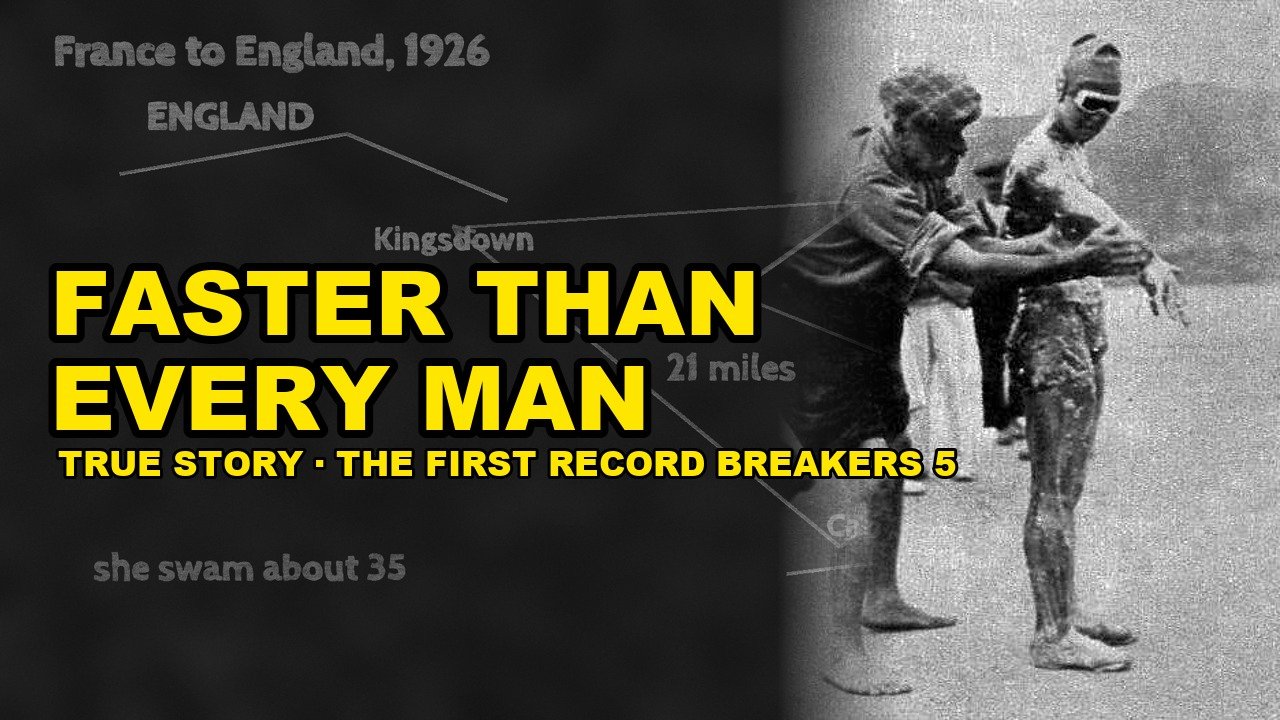
Early in the morning of the sixth of August, 1926, on the beach at Cap Gris-Nez in France, a young American woman stood at the edge of the water. She was covered from head to toe in thick grease against the cold. She wore a red cap, tinted goggles and a two-piece swimsuit she had made herself. Twenty-one miles away was England. Many people believed no woman could ever swim there. At seven minutes past seven, she walked into the sea.
The butcher’s daughter
Her name was Gertrude Ederle, and she was born on the twenty-third of October, 1905, in New York City. Her father ran a butcher’s shop on Amsterdam Avenue in Manhattan. The family spent summers at Highlands, on the New Jersey shore, and that is where Gertrude learned to swim. As a child she had measles, which damaged her hearing.
She was fast. As a teenager she set world records, and at the 1924 Olympics in Paris she won gold in the relay and two bronze medals. Then she turned to the hardest swim of all.
Pulled from the sea
In August 1925, aged nineteen, she tried to cross the Channel for the first time. After many hours in the water, her trainer had her pulled out, believing she was in trouble. Gertrude was furious. She always insisted she could have finished. People said she had failed, and some said it proved that the Channel was simply too much for a woman.
Bill Burgess
She came back the next summer with a new trainer: Bill Burgess. If that name sounds familiar, it should. In 1911 Thomas William Burgess, known as Bill, became only the second person in history to swim the Channel, thirty-six years after Matthew Webb. Now he was helping a twenty-year-old woman try to do it faster.
On the tugboat beside her were her father, Bill Burgess, reporters and a crew. Before she started, she asked her father not to pull her out unless she sank. Her father had promised her a red sports car, a roadster, if she made it.
The swim
The day began calm. But in the afternoon the weather turned. Rain fell, the wind rose, and waves six feet high pushed against her. Jellyfish stung her. The tides dragged her sideways, so that instead of twenty-one miles she swam about thirty-five.
At one point, as the sea grew rougher, the people on the boat began to worry, and someone called to her to come out. She kept swimming. Stroke after stroke, hour after hour, she kept going towards England.
In the evening, as it grew dark, crowds gathered on the English shore. At about twenty to ten at night, at Kingsdown in Kent, Gertrude Ederle walked out of the sea. She had been swimming for about fourteen and a half hours. The men’s record was sixteen hours and thirty-three minutes. She had beaten it by almost two hours. The first woman to swim the English Channel was faster than every man before her.
Two million people
When she came home to New York, the city gave her a ticker-tape parade. More than two million people lined the streets to cheer her. President Calvin Coolidge called her America’s best girl. And yes, her father bought her the red roadster.
The teacher
For the rest of her life, Gertrude’s hearing slowly faded, and by the 1940s she had lost most of it. She did not stop swimming. She spent many years as a swimming teacher for deaf children, helping them feel at home in the water, just as she always had.
She lived to ninety-eight, and died in 2003 in New Jersey.
There is a lesson in the order of things here. First she was pulled out. Then she came back. The world remembers the record. The children she taught remember the teacher. Ask the women in your family about the time someone told them they couldn’t. Their answers are worth writing down.
Who in your family was told they couldn’t, and did it anyway? Get free questions to help you write it, read our step-by-step guide on how to write your life story, and start writing your own story at talesof.life.
Sources: Wikipedia – Gertrude Ederle; History.com – Gertrude Ederle, the first woman to swim the English Channel; Monmouth County Historical Association – An American girl could do it; Wikipedia – Thomas William Burgess. Pictures: Gertrude Ederle being greased by Bill Burgess before her Channel swim, August 1926 (Le Miroir des sports, public domain) via Wikimedia Commons.