
 Written by
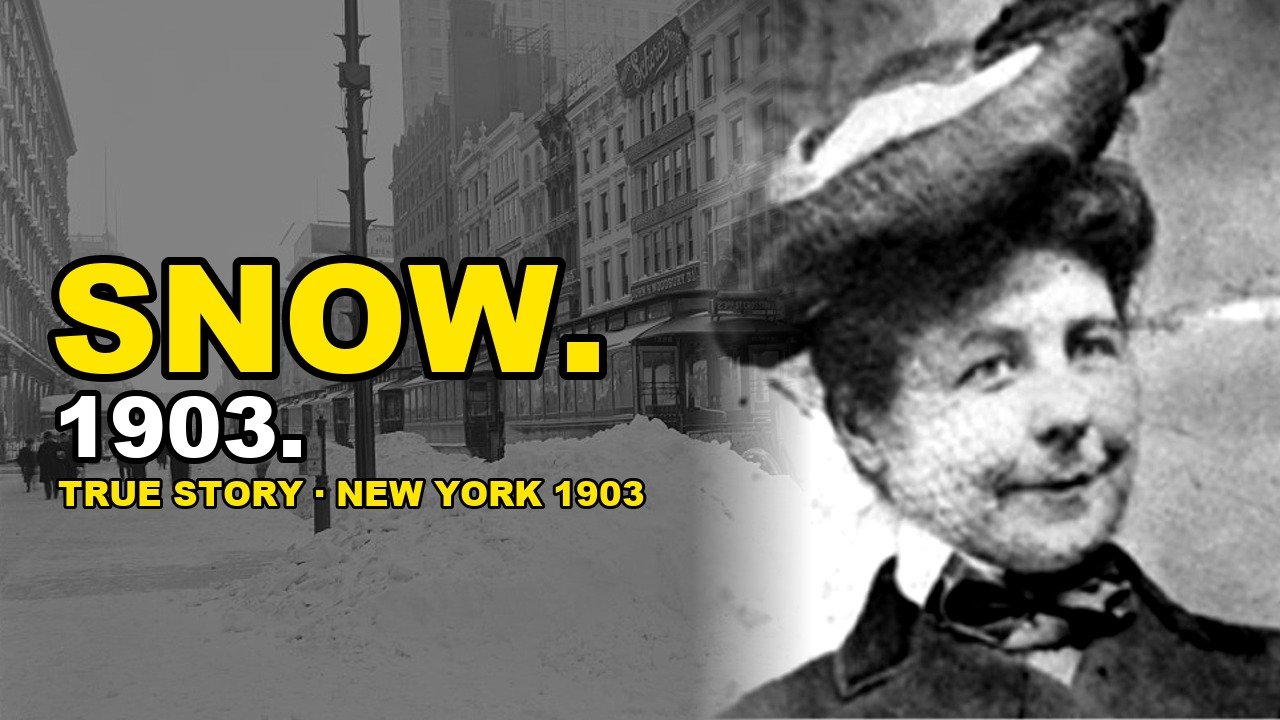
New York, a winter day in the early 1900s. Snow is falling hard. A streetcar rattles down the street, and the driver can barely see. Every few minutes he has to open his window or stop to wipe the snow and ice from the glass with his hand. The cold blows in on the passengers. And one of them, a woman visiting from Alabama, is watching him very closely.
A woman from Alabama
Mary Anderson was born in 1866 on a plantation in Alabama. Her father died when she was a little girl. In 1889 she moved with her mother and sister to the young city of Birmingham, where the family built an apartment building, the Fairmont, and Mary managed it. A few years later she went west to Fresno, California, and ran a cattle ranch and a vineyard. She was a practical woman who was used to solving problems.
Around the turn of the century she returned to Birmingham to care for a sick aunt. And in the winter of about 1902, she travelled to New York.
The driver and the glass
Streetcars in those days had a big front window to protect the driver from the wind. But when it snowed or rained, the window became useless. Drivers opened it, or stopped, to clear the glass by hand. Some simply leaned out into the weather to see the road.
Mary watched this again and again, and she asked a simple question: why should the driver have to clear the glass by hand? Surely it could be done from inside.
A blade and a lever
She worked out a design. A rubber blade on a spring-loaded arm would sit on the outside of the glass. Inside, the driver would have a lever. When he moved the lever, the blade swept across the window and cleared away the snow and rain. A counterweight kept the blade pressed firmly against the glass.
In June 1903 she applied for a patent. On the tenth of November 1903 she received United States patent number 743,801 for a window-cleaning device. It was the first windshield wiper that really worked.
No commercial value
Then she tried to sell it. In 1905 she offered the rights to a company in Canada. They wrote back that they did not consider it to be of such commercial value as would warrant undertaking its sale. In other words: no.
At that time there were still very few cars on the roads, and no company wanted to take a chance on her idea. Mary put the patent away.
A patent protects an invention for a limited time. Mary Anderson’s ran out in 1920, and her wiper had never been made in large numbers. By then cars were everywhere, and drivers needed exactly what she had designed.
In 1922, just two years later, Cadillac began fitting wipers as standard equipment on its cars. Soon every car had them. Mary Anderson received nothing from it.
Remembered at last
She went on with her life in Birmingham, running the Fairmont Apartments for many years. She died in 1953, at the age of eighty-seven. For a long time, almost nobody knew that the wipers on every car began with her.
In 2011 Mary Anderson was finally inducted into the National Inventors Hall of Fame. Her patent drawing, a simple lever and a blade on a window, now hangs beside the names of the greatest inventors in history.
Today, when rain begins to fall, millions of drivers reach for a small switch without even thinking. The blades sweep, the road appears, and a family gets home safely. Every safe drive home in the rain carries a little of what Mary saw on that snowy day.
What we can learn
Mary Anderson was not an engineer. She was a woman who noticed a small, everyday problem and refused to accept it. Many families have someone like her: a grandmother who always found a smarter way, an aunt who could fix anything. Their ideas are usually remembered only at the kitchen table, and then lost, unless someone writes them down.
A snowy street, a streetcar driver leaning out into the cold, and a woman who asked why. Every time a wiper sweeps the rain away, her simple question is still at work.
Who in your family always found a smarter way to do things? Get free questions to ask them, read our step-by-step guide on how to write your life story, and start writing your own story at talesof.life.
Sources: National Inventors Hall of Fame – Mary Anderson; Wikipedia – Mary Anderson (inventor); Google Patents – US743801A Window-cleaning device. Pictures: Mary Anderson (public domain) and her 1903 patent drawing (public domain), via Wikimedia Commons.