
 Written by
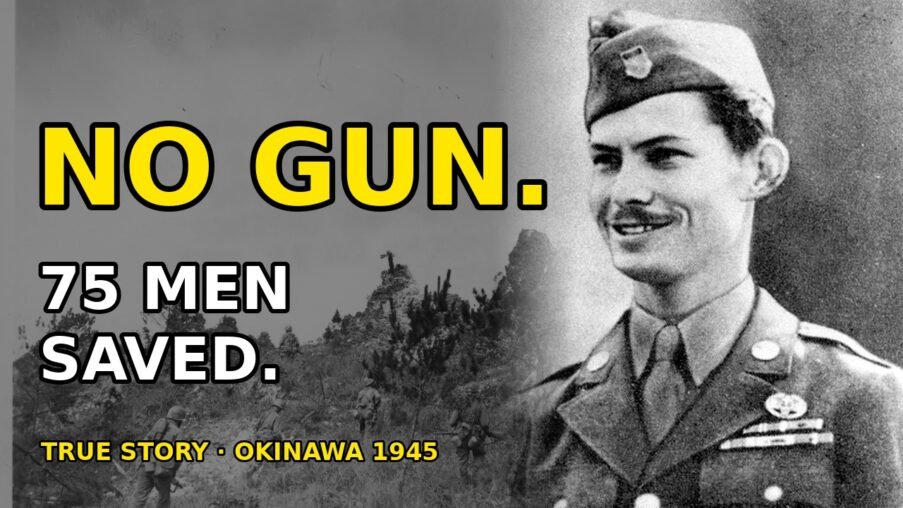
 This is the true story of Desmond Doss. In 1942 he joined the US Army and refused to carry a weapon. Three years later, on a cliff on Okinawa that the soldiers called Hacksaw Ridge, he stayed alone under fire and lowered wounded men to safety, one by one.
The boy and the picture
Desmond Doss was born in Lynchburg, Virginia, in 1919, into a Seventh-day Adventist family. At home hung a framed poster of the Ten Commandments, with a picture of Cain killing his brother Abel. Doss later said that picture stayed with him. Thou shalt not kill became the rule of his life.
Why Desmond Doss would not carry a gun
When war came, he could have asked for a deferment for his shipyard job. He did not. Drafted in April 1942, he refused to carry a rifle and called himself a conscientious cooperator: he would serve anywhere, as long as he could save lives instead of taking them. The men in his unit called him a coward and threw boots at him while he prayed. His officers tried to have him discharged. He stayed, and became a combat medic in the 77th Infantry Division.
Hacksaw Ridge
In spring 1945, his battalion reached the Maeda Escarpment on Okinawa, a ridge crowned by a sheer rock face. During one assault, heavy fire crashed into the men at the top and the rest were driven back down. Doss stayed. Alone and unarmed, he dragged the wounded to the edge one by one and lowered them down on a rope-supported stretcher. Each time, he prayed: Lord, please help me get one more.
Doss thought he saved about fifty men. Others believed it was closer to a hundred. His Medal of Honor citation settled on about 75.
One more, even when wounded
Three weeks later, in a night attack near Shuri, a grenade tore into his legs. He waited five hours for stretcher bearers, then gave up his place to a man more badly wounded. A sniper shattered his arm. He bound a rifle stock to it as a splint and crawled 300 yards to the aid station.
The medal and the price
On 12 October 1945, President Harry Truman placed the Medal of Honor around his neck. Desmond Doss was the first conscientious objector ever to receive it. He came home with tuberculosis, spent more than five years in hospitals and lost a lung. He died in 2006, aged 87. Ten years later, the film Hacksaw Ridge brought his story to millions.
Every family has a quiet hero
In short, Desmond Doss never tried to prove anyone wrong with words. He knew what he believed and simply went back for one more. Every family has people like that, who quietly held on to what they knew was right. Their stories are worth writing down, one chapter at a time.
Prefer to listen? The full episode is on Spotify and Apple Podcasts.
Sources: Wikipedia, Desmond Doss, Medal of Honor citation (Military Times Hall of Valor), Wikipedia, Battle of Okinawa. Photos: Wikimedia Commons (public domain and CC licences).