
 Written by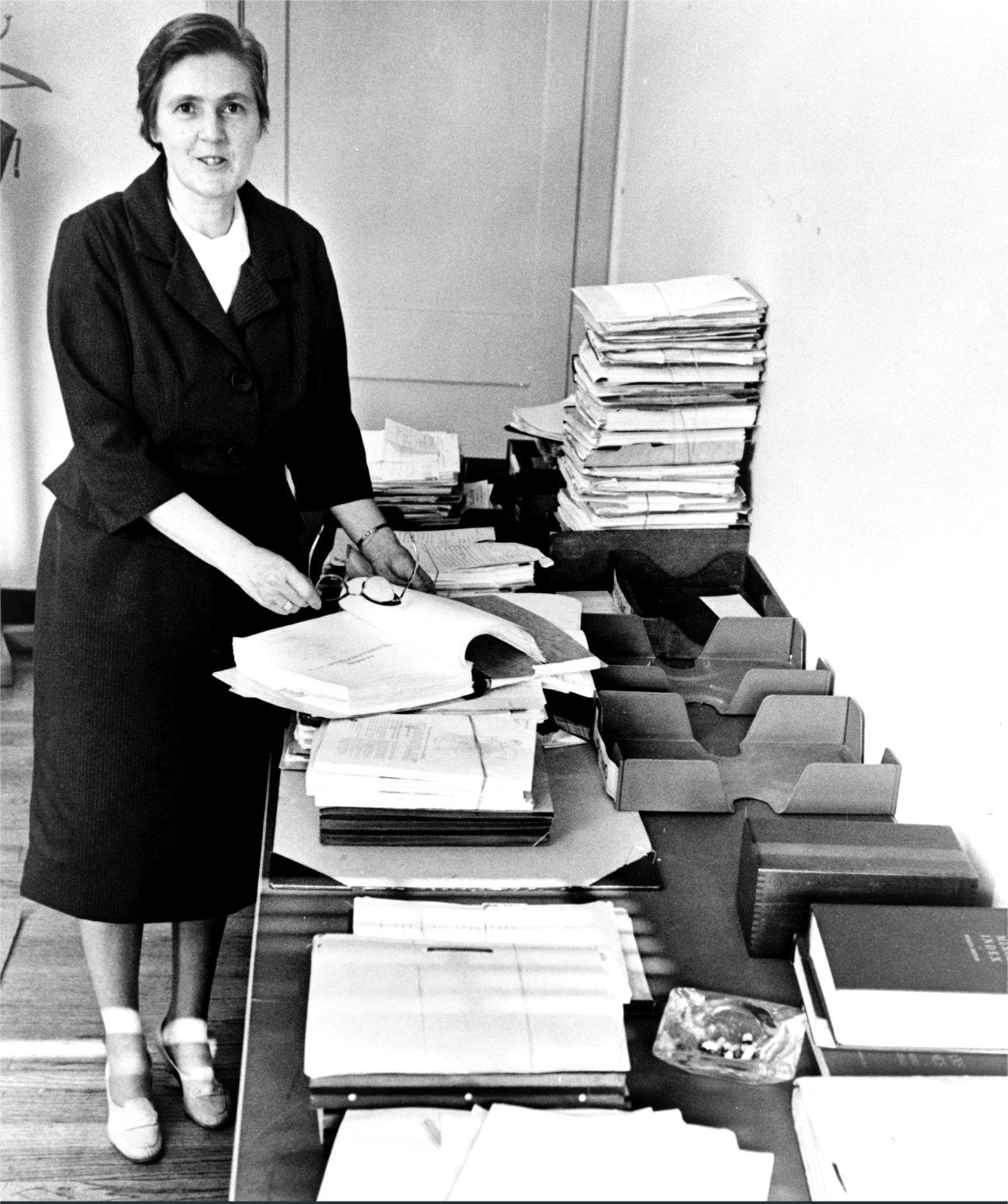
In September 1960, a thick application landed on the desk of a new doctor at the US Food and Drug Administration. It was for a sleeping pill already sold in more than twenty countries, a pill so trusted in West Germany that people bought it without a prescription. Her bosses expected a quick yes. Frances Kelsey said no, and she kept saying no for a year and a half.
“Dear Mr. Oldham”
Frances Oldham was born in 1914 on Vancouver Island, Canada. In 1936 she wrote to a professor at the University of Chicago, Eugene Geiling, to ask for a research job. His reply began “Dear Mr. Oldham”. He had assumed Frances was a man. She took the job anyway, and later said that if her name had been Elizabeth or Mary Jane, she might never have got that first step up.
A year later, a company sold a liquid medicine called Elixir Sulfanilamide, dissolved in diethylene glycol, a chemical related to antifreeze. Nobody tested the mixture, and more than a hundred people died. Geiling’s lab investigated, and the young Frances helped. She saw what happens when a medicine reaches people before anyone asks the right questions.
An easy file
In 1960 Frances Kelsey joined the FDA as a medical officer. Within weeks she was handed an application from the William S. Merrell Company for thalidomide, to be sold in America as Kevadon. In Europe it was used for sleeplessness, anxiety and the morning sickness of pregnancy. Under the law at the time, if the agency did nothing for sixty days, the drug was approved automatically.
Kelsey found warm letters from doctors but very little hard science, and almost nothing about what the drug did in the human body over months. She wrote back that the application was incomplete. That stopped the clock. Each time new papers came, she found they were still not enough.
The pressure
The company phoned her, came to her office and went over her head to her superiors. According to later accounts, they contacted her and her bosses around fifty times. Her superiors backed her, and with two colleagues, Lee Geismar and Jiro Oyama, she kept asking the same plain questions.
In December 1960 she read a short letter in the British Medical Journal from a Scottish doctor, Leslie Florence. Some patients who had taken thalidomide for months had tingling, numbness and pain in their hands and feet. If the pill could damage the nerves of an adult, Kelsey asked, what might it do to a baby still growing inside its mother? The proof that it was safe in pregnancy never came.
The answer arrives
In November 1961, the German doctor Widukind Lenz and the Australian obstetrician William McBride each linked a wave of severe birth defects to thalidomide taken early in pregnancy. Around the world, more than ten thousand babies were born with damage caused by the drug. In March 1962, Merrell withdrew its American application. Kelsey had never approved it.
The story was not completely clean. While the application waited, the company had handed out tablets to more than a thousand American doctors as “investigational” samples. Seventeen American babies were confirmed to have been born with thalidomide damage, and there were probably more. For those families, the refusal came too late.
An award and a new law
On 7 August 1962, President John F. Kennedy gave Frances Kelsey the President’s Award for Distinguished Federal Civilian Service. She was only the second woman to receive it, and she said the credit belonged to her team. On 10 October 1962 Kennedy signed the Kefauver-Harris Amendment: from then on, a company had to prove that a drug worked, patients in trials had to give consent, and serious side effects had to be reported.
Kelsey worked at the FDA until 2005, retiring at ninety after forty-five years. She died on 7 August 2015, at the age of 101, exactly fifty-three years after the day she received her award from President Kennedy.
What we can learn
Frances Kelsey did not discover a cure or invent a machine. She read a file carefully, noticed what was missing, and refused to sign until someone could answer her questions. Nobody makes films about the disasters that did not happen. But there are American families whose story might have been very different, and most of them have never heard her name.
Watch the full story (11 min):
Who in your family did the right thing when it was hard? Their story deserves to be written down. Get free questions to ask them with our Life Story Question Generator, or start writing one chapter a day with the 40-Day Story Challenge.
Sources: Wikipedia, Frances Oldham Kelsey; U.S. FDA, “Frances Oldham Kelsey: Medical reviewer famous for averting a public health tragedy”; Science History Institute, “The Woman Who ‘Turned Back a Plague of Old Testament Proportions'”; Wikipedia, Thalidomide scandal; Wikipedia, Kefauver Harris Amendment; Morton Mintz, The Washington Post, 15 July 1962.