
 Written by
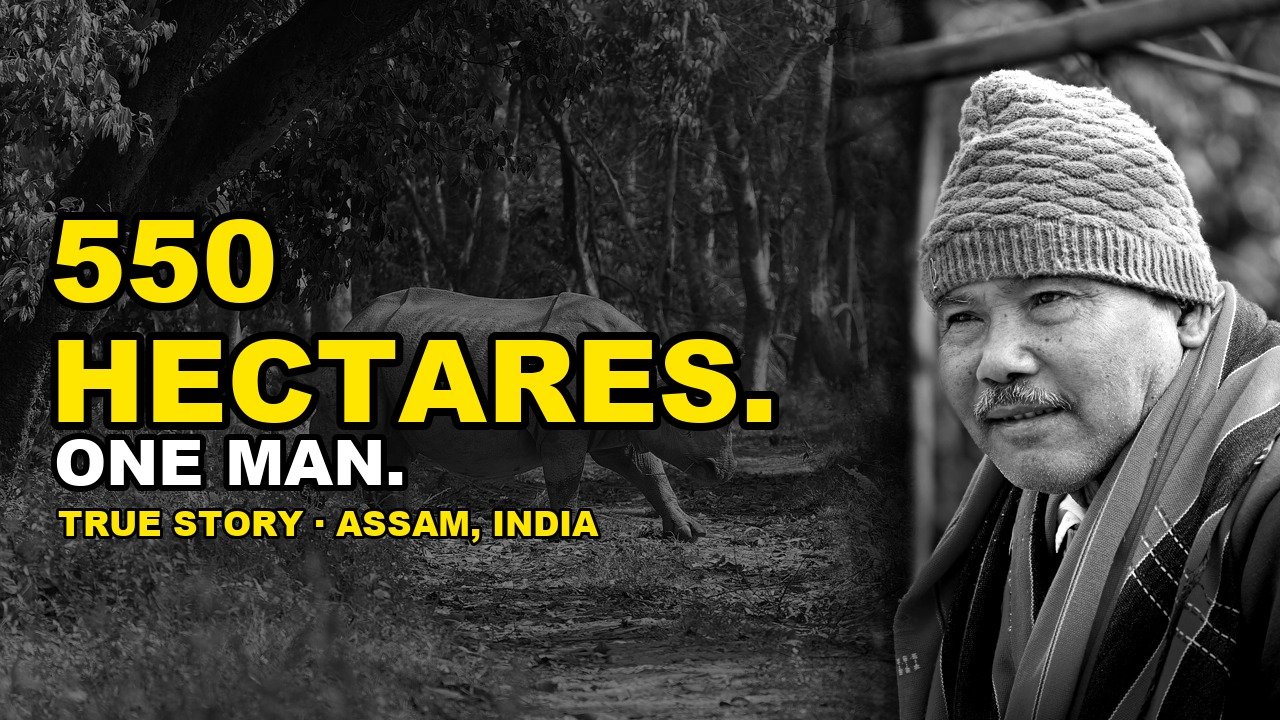
In 2008, forest officials in Assam, in the far northeast of India, followed a herd of about 115 wild elephants onto a sandbar in the Brahmaputra River. They expected open sand. They found a forest that was on no map, and learned that one man had planted it, by hand, for almost thirty years.
Snakes on the sand
Jadav Payeng, known as Molai, was born in 1959 near Jorhat into the Mising people, who have lived beside the Brahmaputra for generations. In 1979, after a great flood, the teenage Jadav walked onto a bare sandbar called Aruna Chapori and found snakes that had died in the heat. There were no trees and no shade. He later remembered sitting down among them and weeping.
He was told nothing would grow on that sand, but that he could try bamboo. He planted about twenty bamboo seedlings.
The one who stayed
The same year, the Social Forestry Division of Golaghat district started a planting project on about 200 hectares of the sandbar, and Jadav worked on it as a labourer. After about three years the project was abandoned and the other workers left. Jadav stayed. For years, much of the time alone, he planted, and when the monsoon floods washed his seedlings away, he planted again. Nobody paid him; he lived from his cows and buffaloes, selling milk.
The animals come back
The bamboo held the sand. Trees followed, then shade, fallen leaves and soil. Birds came first, then deer, monkeys and vultures. Then one-horned rhinos, Bengal tigers, and a herd of about a hundred wild elephants that returns every year and stays for months. Calves have been born in the forest. Over the years, tigers killed around a hundred of Jadav’s own cows and buffaloes. He did not blame the tigers; he blamed people who destroy the places where animals live.
Forest Man of India
When the elephants damaged houses in a nearby village in 2008, some villagers wanted the forest cut down. Jadav refused, and over time many of them came round. In 2012 Jawaharlal Nehru University named him the Forest Man of India, and in 2015 the President of India gave him the Padma Shri, one of the country’s highest civilian honours. The Molai forest, named after him, is usually said to cover about 550 hectares, more than New York’s Central Park (about 341 hectares). He still goes to his forest every day.
What we can learn
Jadav Payeng did not set out to save the world. He set out to give some shade to a sandbar where animals had died, and then he did the same small thing the next day, and the next, for more than forty years. Most families have someone like that: a person who quietly kept doing one good thing long after everyone else had stopped. Their stories are usually told once at a kitchen table and then lost.
If someone in your family carries a story like that, ask them about it and write it down. Get free questions to ask them, or read how to write a life story step by step.
Sources: Wikipedia; Sanctuary Asia (2012); The Man Who Planted a Forest (2012). Photo: Jadav Payeng by JyotiPN, CC BY-SA 4.0, via Wikimedia Commons.