
 Written by
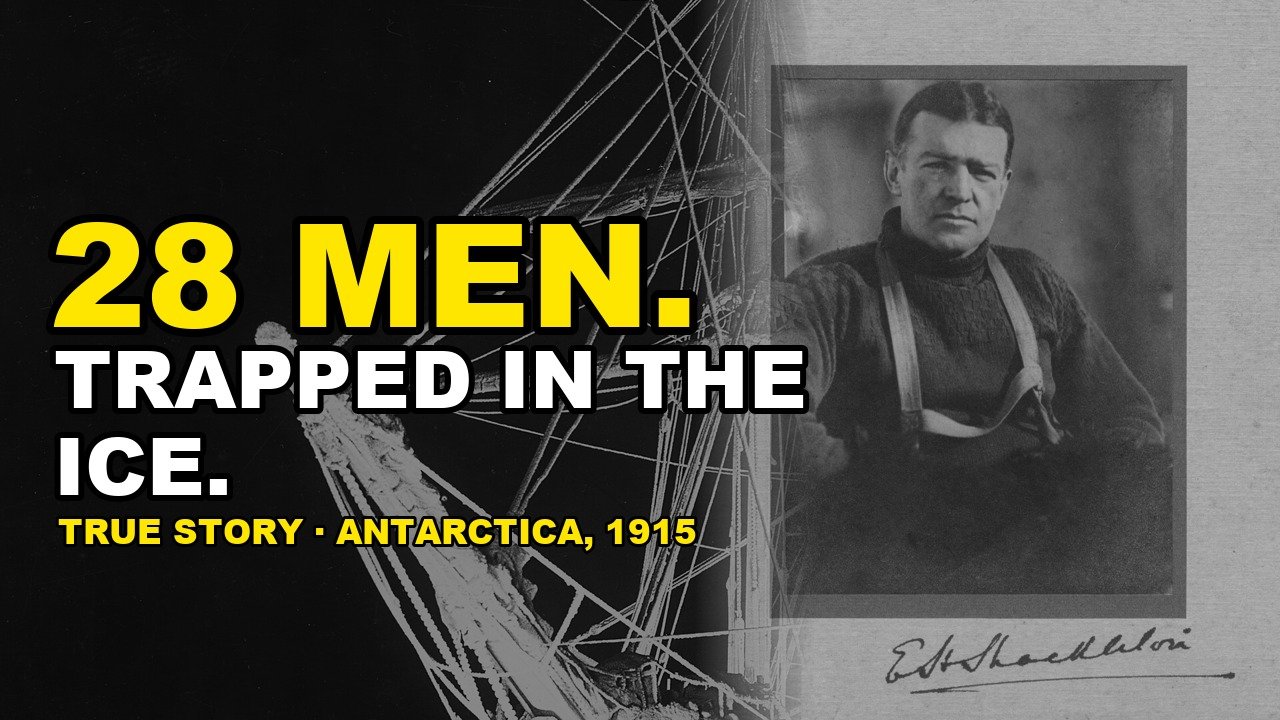
On 30 August 1916, on a narrow strip of rock and ice at the edge of Antarctica, twenty-two men were living under two upturned boats. Every morning, the man in charge rolled up his sleeping bag and told the others to pack their things, because the Boss might come today. That morning, out of the mist, a small steamship came into view.
A man who turned back
Ernest Shackleton was born in 1874 in County Kildare, Ireland. In 1909 he came within about 180 kilometres of the South Pole, closer than anyone before him, and then turned back because his men would not all have survived the return. He later told his wife he thought she would rather have a live donkey than a dead lion. For Shackleton, the people with him mattered more than the prize.
Frozen in
In 1914 he set out to cross the whole of Antarctica on foot. His ship was named Endurance, after his family motto, Fortitudine vincimus: by endurance we conquer. She left South Georgia on 5 December 1914 with twenty-eight men. On 18 January 1915 the pack ice of the Weddell Sea closed around her. Through the dark winter the men played football on the ice, raced their dog teams and sang to Leonard Hussey’s banjo. In October the ice began to press, and on 27 October 1915 Shackleton ordered everyone off the ship. She sank on 21 November.
Five months on the ice
The men lived in tents on drifting floes, at Ocean Camp and then Patience Camp, for more than five months. The photographer Frank Hurley could save only about 120 of his glass plates; many of the photographs we know today are those. On 9 April 1916 the floe broke up, and they rowed three small boats for nearly a week to Elephant Island. It was the first land they had stood on in 497 days.
1,300 kilometres in an open boat
No ship would ever look for them on Elephant Island. So on 24 April Shackleton and five men, Frank Worsley, Tom Crean, Harry McNish, John Vincent and Timothy McCarthy, set out in the James Caird, a lifeboat under seven metres long, across some of the roughest sea on Earth. Sixteen days later they reached South Georgia, on the wrong side of the island. Shackleton, Worsley and Crean then crossed its unmapped mountains on foot in thirty-six hours and walked into the whaling station at Stromness on 20 May 1916.
All safe, all well
Three rescue attempts were stopped by the ice. On the fourth, the Chilean tug Yelcho, commanded by Luis Pardo, reached Elephant Island on 30 August 1916. Shackleton counted the figures on the beach and called out to ask if they were all well. The answer came back: all safe, all well. Every one of the twenty-eight men of the Endurance came home. (The expedition’s second party, on the other side of Antarctica, lost three men.) In March 2022 the wreck of the Endurance was found 3,008 metres down, her name still clear on the stern.
What we can learn
By the goal he set himself, Shackleton failed: he never crossed Antarctica. But he is remembered for something else. When everything was lost, the people in his care still came first. Most families have someone like that, a parent or grandparent who held everyone together through the hardest winter of their lives and never made a fuss about it. Their stories are usually told once at a kitchen table and then lost. If someone in your family carries a story like that, ask them about it, and write it down while you still can. Get free questions to ask them, or read how to write your family’s story step by step.
Sources: Wikipedia, Imperial Trans-Antarctic Expedition and Endurance (1912 ship); Ernest Shackleton, South (1919); Alfred Lansing, Endurance (1959). Photo: Ernest Shackleton by Frank Hurley, 1916 (public domain).