
 Written by
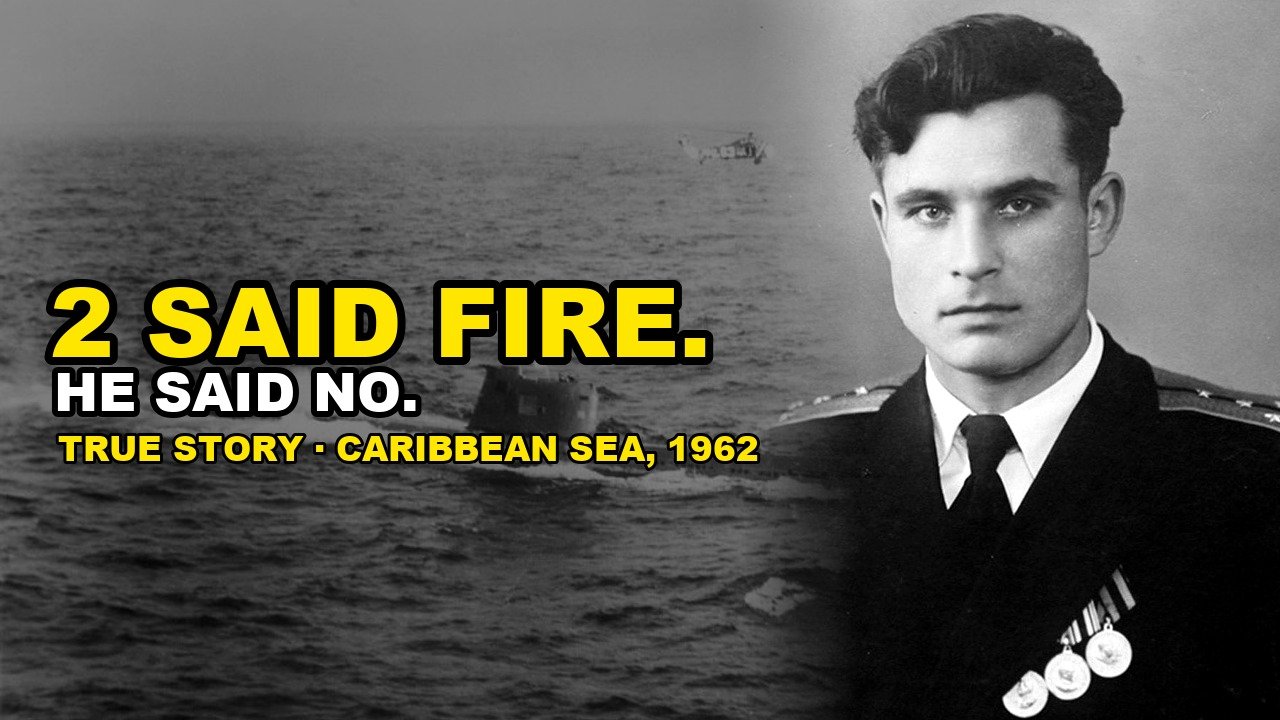
On 27 October 1962, the most dangerous day of the Cuban Missile Crisis, a Soviet submarine called B-59 was hiding deep in the Caribbean Sea. It carried a torpedo with a nuclear warhead. Its captain believed the war had already begun. Only one man on board refused to agree to fire it: Vasili Arkhipov.
A quiet officer
Arkhipov was born in 1926 in Staraya Kupavna, near Moscow, into an ordinary rural family. He went to sea young and became a submarine officer. His wife Olga later described him as intelligent, polite and very calm. In 1961 he was second-in-command of the nuclear submarine K-19 when its reactor failed; seven engineers and their officer saved the boat and died from radiation within a month. Arkhipov had seen up close what nuclear power can do to people.
The submarine in the dark
In October 1962 four Soviet diesel submarines sailed secretly towards Cuba, each with one nuclear torpedo. Arkhipov was chief of staff of the brigade, on board B-59. In the tropics the heat inside rose above 45 °C, water was rationed and the batteries ran low. On 27 October eleven American destroyers and the carrier USS Randolph found B-59 and dropped small practice depth charges to signal it to surface. Nobody on board knew what the signal meant. They had not heard from Moscow for days.
Three officers, one vote
Captain Valentin Savitsky ordered the nuclear torpedo prepared. On B-59 three senior officers had to agree. The political officer, Ivan Maslennikov, agreed. Arkhipov did not. By the crew’s later accounts, he argued calmly that the explosions were signals, not an attack, and persuaded the captain to surface. B-59 came up among the American ships. There was no war. The next day, Moscow announced that its missiles would leave Cuba.
Forty years of silence
There was no hero’s welcome. Arkhipov kept serving quietly, became a vice admiral, retired in 1988 and died in 1998. Only in 2002, at a conference in Havana, did veterans tell the full story, and Thomas Blanton of the National Security Archive said Arkhipov “saved the world”. Most of what we know comes from the memories of men on board, and some historians point out that official records do not mention the argument. What every account agrees on: the torpedo was prepared, it was not fired, and the submarine surfaced instead.
What we can learn
Courage is not always loud. Sometimes it is staying calm and saying no when everyone expects yes. Most families have someone like that, a grandparent or parent who kept a cool head in the worst moment and never talked about it. Their stories are usually told once, at a kitchen table, and then lost. Get free questions to ask them, and start writing your own story at talesof.life.
Sources: Wikipedia (Vasily Arkhipov); National Security Archive, The Submarines of October (2002); PBS Secrets of the Dead, The Man Who Saved the World (2012); Future of Life Institute. Photo: Soviet submarine B-59 on the surface, October 1962, U.S. Navy (public domain).