 Written by
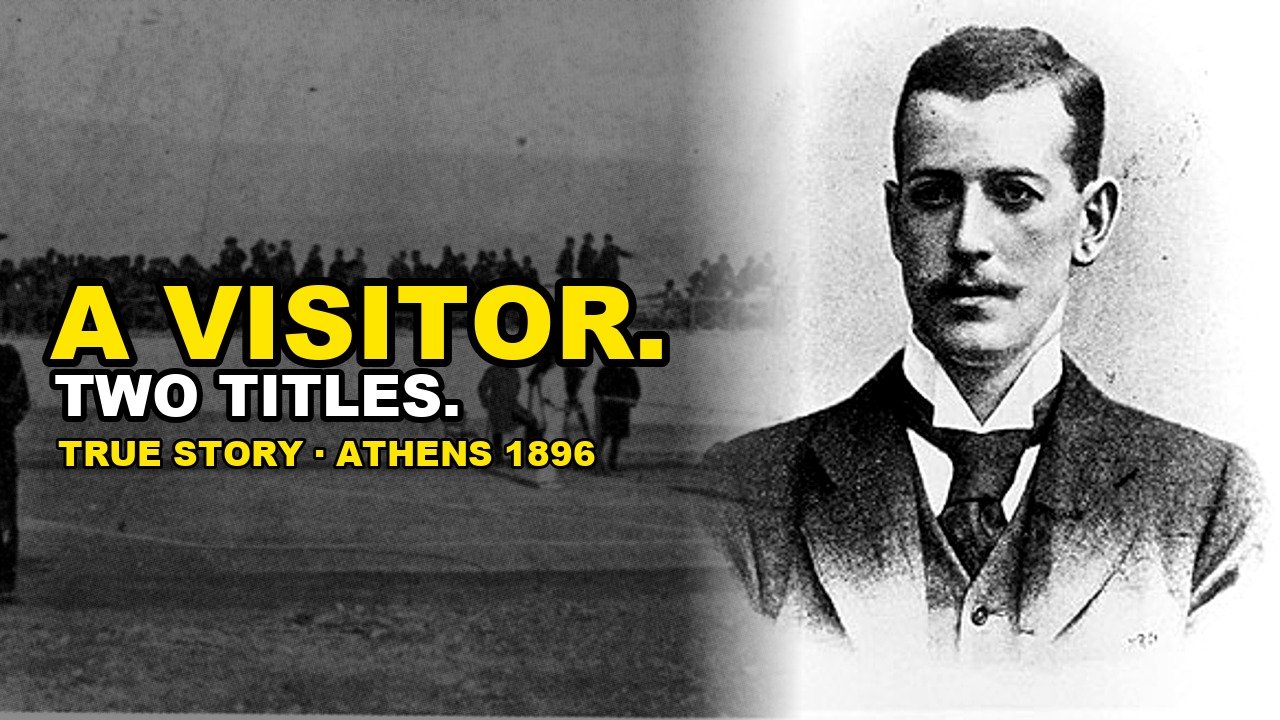
At Easter 1896 a young law student from Oxford arrived in Athens. He had not come to compete. He had come to visit a Greek friend and to watch the first modern Olympic Games. A week later he had won two Olympic titles, and one of them together with the man he had just beaten.
An orphan from Dublin
John was born in Dublin in 1870. His father, Patrick Boland, was a Dublin businessman in the baking trade. His father died when John was still a small boy, and a few years later his mother died too. By the age of twelve he and his six brothers and sisters were orphans.
They were placed in the care of their uncle, Nicholas Donnelly, a bishop in Dublin. John went to good schools, became head boy of his school in England, studied for a while in Germany, and then went to Oxford to study law.
Easter in Athens
Through Oxford he got to know a young Greek named Manos. When the Olympic Games were revived in Athens, Manos became a member of the organising committee, and he invited John to come and see them. So, at Easter 1896, John Boland travelled to Greece as a spectator.
But there were not many tennis players in Athens. Manos entered his friend in the tennis tournament. And John Boland, who had come to watch, suddenly found himself on an Olympic court.
Four matches
The tournament was small, but the matches were real. In the first round Boland played a German, Friedrich Traun. Then he beat Evangelos Rallis of Greece, then Konstantinos Paspatis of Greece in the semi-final.
In the final he met Dionysios Kasdaglis, a Greek player from Egypt. Boland won that too. The young visitor from Oxford was the first Olympic tennis champion.
Rival, then partner
Then came the doubles. And here is the part of the story I love the most. Boland’s partner in the doubles was Friedrich Traun, the German he had beaten in the very first round.
An Irishman and a German, rivals one day and partners the next, played side by side. They beat two Greek pairs and won the doubles title. In a world that was already full of tension between nations, it was a small and beautiful sight.
A harp on green
When the winners were honoured, officials prepared the flag of Great Britain for Boland, because Ireland was then part of the United Kingdom. According to his own account, Boland told them that he was Irish, and that the Irish flag was a gold harp on a green background. The officials agreed to have one made.
Like all winners in 1896, he received a silver medal and an olive branch. Gold medals for winners did not exist yet.
A life of service
Back home, Boland finished his studies and was called to the bar in 1897, though he never worked as a lawyer. Instead, in 1900, he became a member of parliament for South Kerry, in the west of Ireland, and served there for eighteen years.
He cared most about education. He worked to support the Irish language, he helped to found the National University of Ireland, and for more than twenty years he led the Catholic Truth Society, which published affordable books and pamphlets.
He married, and had a son and five daughters. One of his daughters, Bridget, became a well-known playwright, and another, Honor, became a member of the Irish parliament. John Pius Boland died in London on the seventeenth of March 1958, on St Patrick’s Day, at the age of 87.
What we can learn
His story is a reminder that big stories often begin with a simple yes. Families are full of them: an invitation accepted, a trip taken on a whim, a stranger who became a lifelong friend. They sound small when they are told, but they change everything that follows. Those yes moments are worth remembering, and worth writing down.
A friend’s invitation, an Easter holiday, a place in a tournament nobody expected him to fill. And a young man from Dublin who said yes, and went home with two Olympic titles.
Which simple yes changed your family’s story? Get free questions to ask them, read our step-by-step guide on how to write your life story, and start writing your own story at talesof.life.
Sources: Wikipedia – John Pius Boland; Olympedia – John Boland; Olympics.com – John Boland; Wikipedia – Tennis at the 1896 Summer Olympics. Pictures: John Pius Boland and the 1896 Olympic tennis doubles final, photographed by Albert Meyer (public domain), via Wikimedia Commons.